Adhesive on Tile – Complete Guide for Strong Tile Installation
Adhesive on Tile: A Practical Guide for Strong and Durable Tile Installation
Adhesive on tile is an essential part of modern tile installation. It helps tiles stay firmly in place while improving strength and durability. With the right tile adhesive, both floor and wall surfaces can perform better and last longer. As construction methods evolve, professionals increasingly prefer tile adhesive over traditional cement-based fixing.
This guide explains the importance of tile adhesive, where it is used, how it works, and why selecting the correct solution matters.
What Is Adhesive on Tile?
Adhesive on tile refers to a specially formulated bonding material used to fix tiles securely onto surfaces such as concrete, plaster, or cement screeds. Tile adhesive is designed to provide strong adhesion, flexibility, and resistance to environmental stress.
Unlike traditional cement mortar, modern tile adhesive offers better grip, uniform bonding, and long-term durability, making it suitable for a wide range of tile applications.
What Does Adhesive on Tile Mean?
In simple terms, adhesive on tile refers to the bonding material used to fix tiles onto prepared surfaces. These surfaces may include concrete, plaster, or cement screeds. Tile adhesive is designed to hold tiles securely while allowing slight flexibility.
Compared to old cement-sand mortar, modern adhesive products offer better grip and consistent bonding. As a result, tile performance improves significantly over time.
Why Choose Home Pride Tile Adhesive Products
Home Pride offers reliable tile adhesive solutions designed for consistent performance. Products such as Home Pride 1001 Tile Adhesive and Home Pride 1002 Tile Adhesive are developed for professional and residential use.
These products deliver dependable bonding, smooth application, and long-term durability. Consequently, contractors and builders trust Home Pride for quality tile installation results.
Why Proper Tile Adhesive Is Important
Using the correct adhesive is critical for successful tile installation. For this reason, professional builders rely on specialized products instead of general cement.
Proper tile adhesive helps ensure:
Strong and lasting bonding
Reduced tile movement over time
Crack-free tile surfaces
Even load distribution
Better resistance to daily wear
Because of these benefits, correct adhesive selection prevents costly repairs later.
Areas Where Tile Adhesive Is Commonly Used
Tile adhesive can be applied in many environments. For example, residential and commercial spaces both benefit from its performance.
Common usage areas include:
Floor tile installation
Wall tile fixing
Bathrooms and kitchens
Interior living spaces
Exterior flooring applications
Commercial and industrial areas
Each location may require a specific type of adhesive depending on usage and exposure.
Types of Tile Adhesive Available
Different tile applications demand different adhesive solutions. Therefore, understanding the basic types is helpful.
Common tile adhesive categories include:
Adhesive for ceramic tiles
Adhesive for vitrified tiles
Polymer-modified tile adhesive
Floor-grade tile adhesive
Wall-grade tile adhesive
Selecting the right product improves bonding strength and overall finish
How to Apply Tile Adhesive Correctly
Correct application is just as important as product selection. First, surface preparation must be done properly.
Follow these basic steps:
Clean the surface and remove dust or loose material
Mix the adhesive according to manufacturer guidelines
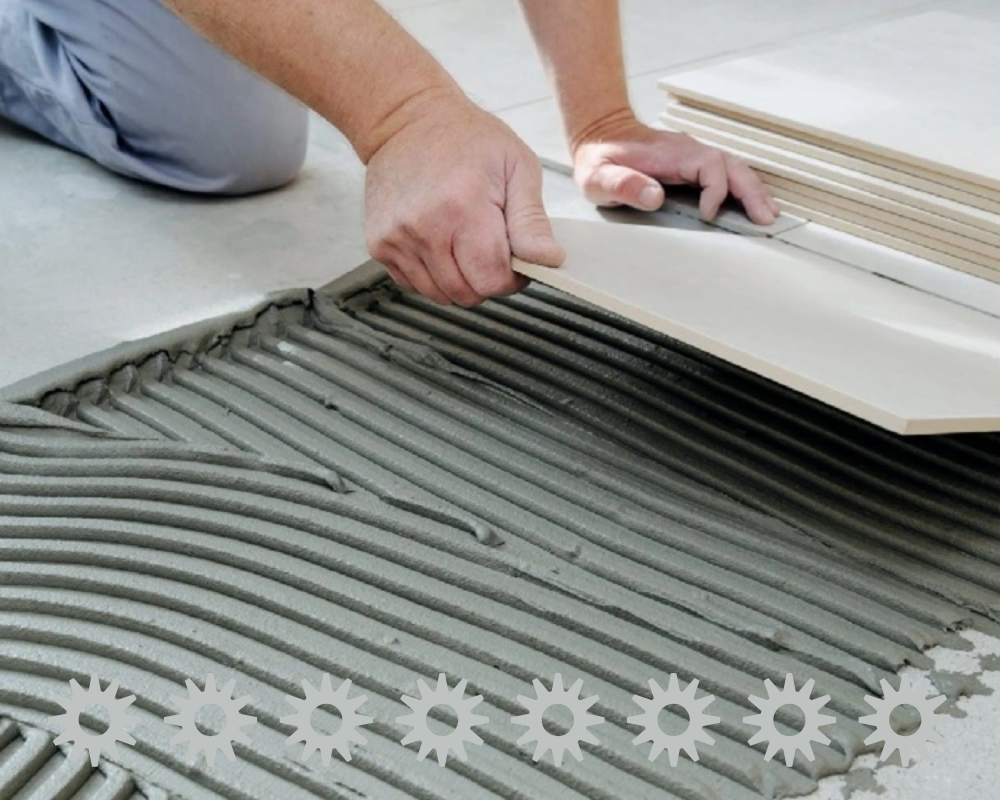
Spread it evenly using a notched trowel
Place tiles with proper alignment and spacing
Allow sufficient curing time before grouting
When applied correctly, tiles remain stable and well-aligned.
Tile Adhesive vs Traditional Cement
Tile adhesive offers several advantages over cement-based fixing methods. For instance, it provides stronger bonding with less material usage.
Key advantages include:
Improved bonding performance
Faster installation process
Cleaner worksite
Reduced material wastage
Better flexibility for modern tiles
Because of these benefits, modern construction increasingly prefers tile adhesive solutions.
Frequently Asked Questions (FAQ)
What is the best adhesive tile for floors?
The best adhesive tile for floors is a high-strength, polymer-modified tile adhesive designed to handle load and foot traffic.
Can tile adhesive be used for wall tiles?
Yes, tile adhesive is suitable for wall tile installation and helps prevent tile slippage when applied correctly.
Is tile adhesive better than cement?
Yes, tile adhesive offers stronger bonding, flexibility, and durability compared to traditional cement-sand mortar.
Can tile adhesive be used in bathrooms and kitchens?
Yes, tile adhesive offers stronger bonding, flexibility, and durability compared to traditional cement-sand mortar.
Is tile adhesive better than cement?
Yes, tile adhesive is ideal for moisture-prone areas such as bathrooms and kitchens when the correct product is selected.
How long does tile adhesive take to cure?
Curing time varies by product, but most tile adhesives require 24–48 hours before grouting.
Conclusion
Adhesive tile plays a crucial role in achieving durable and professional tile installation. With proper selection and correct application, tile adhesive improves strength, stability, and long-term performance. For modern construction needs, choosing a reliable adhesive solution ensures better results and fewer maintenance issues.