
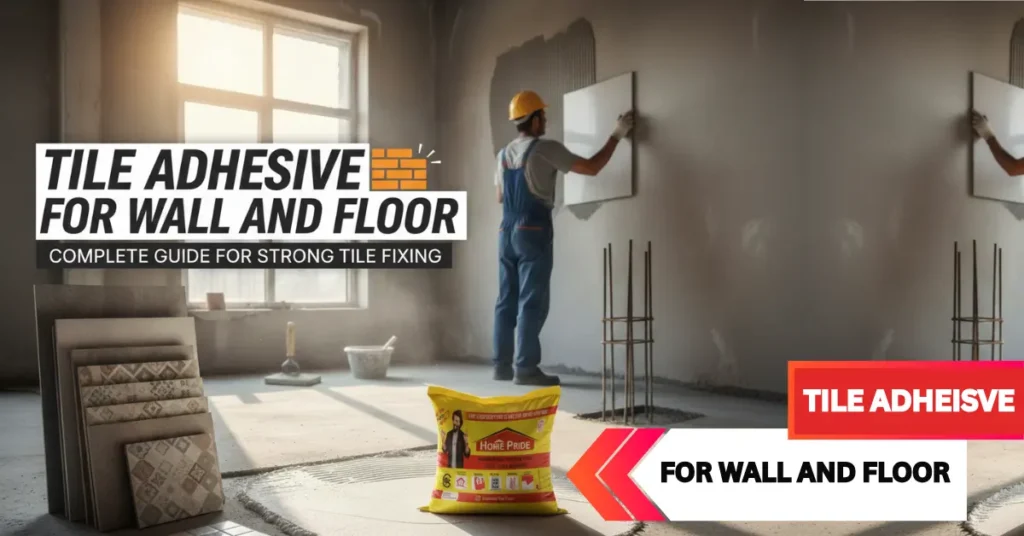
Choosing the right tile adhesive for wall and floor is one of the most important steps in tile installation. Even the best-quality tiles can fail if the bonding material is incorrect. Modern construction now relies on tile adhesive instead of traditional cement mortar because it provides better strength, flexibility, and durability.
This guide explains how tile adhesive works, the difference between wall and floor applications, and how to select the correct product for long-lasting results.
What Is Tile Adhesive?
Tile adhesive is a specially formulated bonding material used to fix tiles on different surfaces. It contains cement, graded aggregates, polymers, and additives that improve adhesion and flexibility. Because of this composition, tile adhesive for wall and floor performs much better than site-mixed cement mortar.
In addition, tile adhesive allows thin-bed application, which helps achieve a clean and professional finish.
Why Tile Adhesive Is Better Than Cement Mortar
Earlier, cement mortar was commonly used for tile fixing. However, modern tiles demand better performance. Using tile adhesive for wall and floor offers many advantages:
- Strong and consistent bonding
- Reduced chances of tile hollow sound
- Better flexibility to handle surface movement
- Faster and cleaner installation
- Suitable for vitrified and porcelain tiles
As a result, tile adhesive has become the preferred choice in today’s construction projects.
Tile Adhesive for Wall Applications
Wall tiles need a bonding material that provides high grip and prevents tile slippage. Tile adhesive for wall and floor is designed to support vertical installations when used correctly.
Common Wall Uses
- Bathroom wall tiles
- Kitchen wall tiles
- Decorative interior walls
- Exterior wall cladding
Wall tile adhesive offers good tack, which keeps tiles in place until the adhesive sets properly.
Tile Adhesive for Floor Applications
Floor tiles face continuous foot traffic and load. Because of this, floor applications need high-strength bonding. Tile adhesive for wall and floor used on floors provides excellent load-bearing capacity and flexibility.
Common Floor Uses
- Living room and bedroom floors
- Kitchen and bathroom floors
- Commercial and office spaces
- Corridors and staircases
A proper floor tile adhesive reduces cracking and tile movement over time.
Difference Between Wall and Floor Tile Adhesive
| Feature | Wall Application | Floor Application |
|---|---|---|
| Load Handling | Low | High |
| Slip Resistance | High | Medium |
| Flexibility | Moderate | High |
| Application Surface | Vertical | Horizontal |
Using the correct tile adhesive for wall and floor based on the surface ensures long-term performance.
Types of Tile Adhesive for Wall and Floor
Cement-Based Tile Adhesive
This is the most commonly used adhesive for residential and commercial projects. It works well for both walls and floors.
Polymer-Modified Tile Adhesive
Polymer-modified tile adhesive for wall and floor provides better bonding strength and flexibility, making it ideal for large tiles.
Ready-Mix Tile Adhesive
This type is mainly used for wall tiles and small-format tiles where ease of use is important.
Heavy-Duty Tile Adhesive
Heavy-duty adhesive supports stone tiles, large tiles, and high-traffic floor areas.
How to Choose the Right Tile Adhesive
Before selecting tile adhesive for wall and floor, consider the following factors:
- Type of tile material
- Tile size and weight
- Wall or floor application
- Indoor or outdoor use
- Moisture exposure
Choosing the correct adhesive prevents tile failure and reduces maintenance issues.
Correct Method to Use Tile Adhesive
Proper installation is as important as choosing the right product. Follow these steps:
- Clean the surface thoroughly
- Mix tile adhesive with water as instructed
- Apply adhesive using a notched trowel
- Fix tiles with firm pressure
- Maintain proper joint spacing
- Allow adequate curing time
Correct application improves the performance of adhesive for wall and floor.
Common Mistakes to Avoid
- Adding cement to tile adhesive
- Applying adhesive on dusty or wet surfaces
- Using wall adhesive for heavy floor tiles
- Applying adhesive too thick
Avoiding these mistakes ensures strong and durable tile fixing.
Final Thoughts
Using the right tile adhesive for wall and floor plays a crucial role in tile durability and finish. Wall applications need good grip, while floor applications require high load-bearing strength. By choosing the correct adhesive and following proper installation practices, you can achieve professional-quality tile installation that lasts for years.



0 Comment