
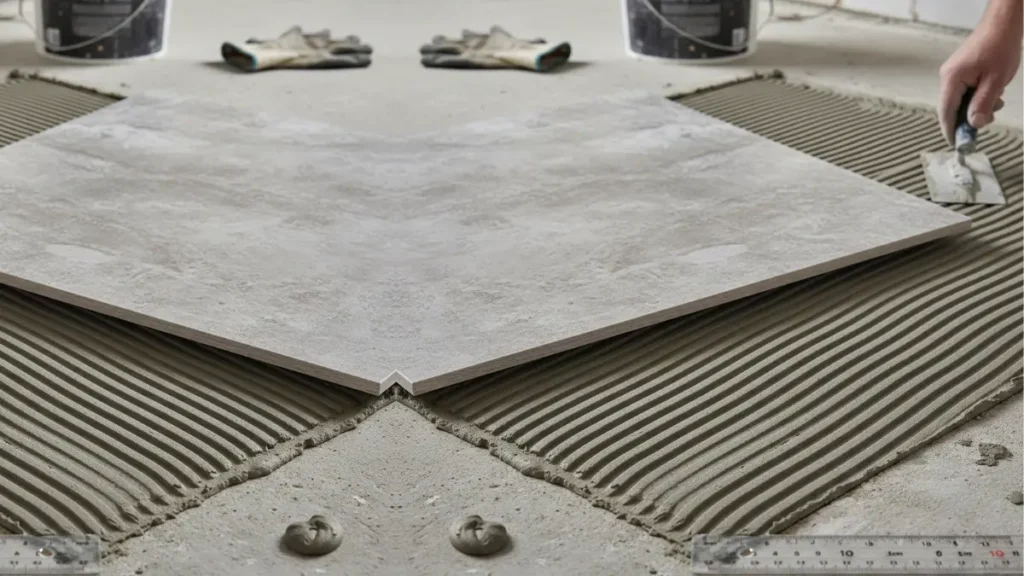
Understanding the correct floor tile adhesive thickness is essential for strong bonding and long-lasting tile installation. Many tile failures occur because installers use the wrong adhesive thickness, which leads to hollow tiles, cracks, and poor durability.
Whether you are fixing floor tiles or wall tiles, knowing the right floor tile adhesive thickness mm and wall tile adhesive thickness helps achieve a professional finish.
Why Floor Tile Adhesive Thickness Matters
The thickness of tile adhesive directly affects bonding strength, tile leveling, and durability. If the adhesive layer is too thin, tiles may not bond properly. On the other hand, if the layer is too thick, it can cause uneven surfaces and weak adhesion.
That is why professionals always follow recommended guidelines for how thick should tile adhesive be during installation.
Standard Floor Tile Adhesive Thickness (MM Guide)
The recommended floor tile adhesives thickness mm depends on tile size and surface condition.
- Small tiles (up to 300×300 mm): 3–5 mm
- Medium tiles (600×600 mm): 5–8 mm
- Large format tiles: 8–12 mm
Maintaining the correct floor tile adhesive thickness ensures proper load distribution and strong grip.
Wall Tile Adhesive Thickness vs Floor Adhesive Thickness
There is a slight difference between floor and wall tile adhesives thickness.
- Wall tile adhesive thickness: 3–6 mm
- Floor tiles adhesive thickness: 5–12 mm
Wall tiles require a thinner adhesive layer because they carry less load compared to floor tiles. Using excessive adhesive on walls may cause tile slipping.
How Thick Is Tile Adhesive Layer in Modern Installation?
A common question among contractors is, how thick is tile adhesive layer in modern tile fixing. Typically, the adhesive layer after pressing the tile becomes thinner than the applied ridges.
When using a notched trowel:
- 10 mm notch trowel creates ~4–5 mm final layer
- 12 mm notch trowel creates ~6–8 mm final layer
This method ensures uniform adhesive distribution and strong bonding.
How Thick Should Tile Adhesive Be for Different Applications?
To understand how thick should tile adhesive be, consider the application area:
- Bathroom floors: 6–8 mm
- Living room tiles: 5–10 mm
- Exterior tiles: 8–12 mm
- Wall tiles: 3–6 mm
Correct thickness improves flexibility, water resistance, and durability.
Factors That Affect Floor Tile Adhesive Thickness
Several factors influence the ideal floor tile adhesives thickness:
- Tile size and weight
- Surface flatness
- Type of tile adhesive used
- Trowel notch size
- Substrate condition
Uneven surfaces may require slightly higher floor tile adhesives thickness mm to achieve proper leveling.
Common Mistakes in Tile Adhesive Thickness
Avoid these common errors:
- Applying very thick adhesive layers
- Using cement instead of proper adhesive thickness
- Not using a notched trowel
- Ignoring wall tile adhesive thickness guidelines
Incorrect adhesive thickness can cause tile debonding and hollow sounds.
Pro Tips for Perfect Adhesive Thickness
- Always use a notched trowel
- Follow manufacturer recommendations
- Do not exceed recommended floor tile adhesive thickness mm
- Press tiles firmly for even adhesive spread
These steps help maintain the ideal tile adhesive layer thickness and ensure long-lasting installation.
Final Thoughts
Maintaining the correct floor tile adhesive thickness is crucial for durable and professional tile fixing. Understanding wall tile adhesive thickness, how thick is tile adhesive layer, and how thick should tile adhesive be helps avoid costly installation failures.
Using proper thickness along with quality tile adhesive ensures strong bonding, better leveling, and long tile life.



0 Comment