
Introduction
Selecting the right surface material is one of the most important decisions in construction and interior design. Whether you are building a new home or renovating an existing space, materials like tile, stone, and marble play a major role in both durability and appearance.
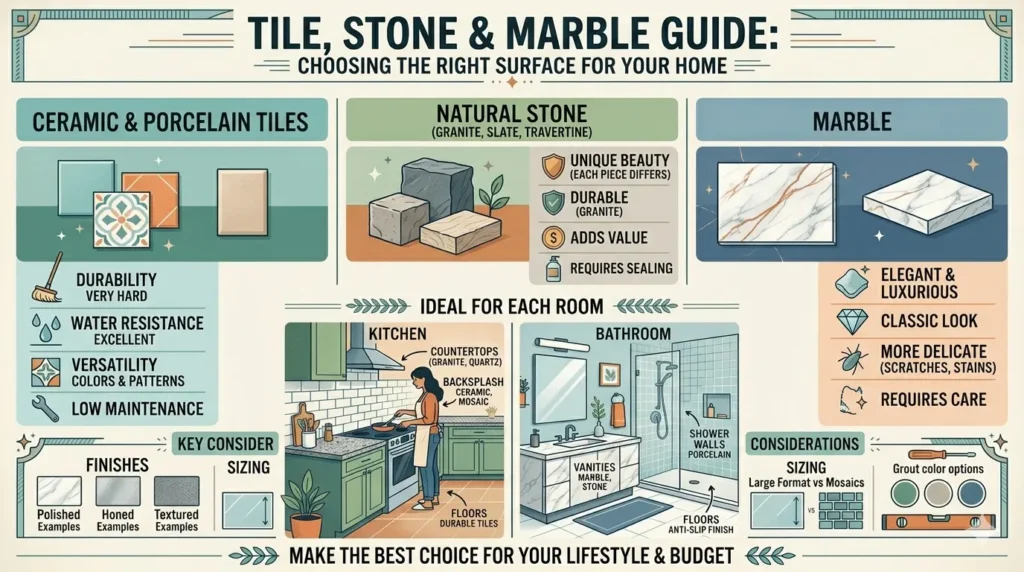
Each material has its own features, benefits, and best-use areas. Understanding the differences between tile, stone, and marble helps you make the right choice for your project.
What Are Tile, Stone, and Marble?
Tile
Tiles are manufactured products made from ceramic, porcelain, or vitrified materials. They are widely used for floors and walls due to their durability, low maintenance, and variety of designs.
Stone
Natural stone includes materials like granite, slate, and sandstone. Stone offers a natural look and is known for its strength and long-lasting performance.
Marble
Marble is a premium natural stone that provides a luxurious and elegant finish. It is commonly used in high-end interiors such as living rooms, bathrooms, and countertops.
Key Differences Between Tile, Stone, and Marble
Understanding the differences helps in selecting the right material:
- Durability: Stone and tiles are highly durable, while marble requires more care
- Maintenance: Tiles are easy to maintain, while marble needs regular polishing
- Appearance: Marble offers a premium look, while tiles provide design variety
- Cost: Tiles are budget-friendly, while marble is more expensive
Choosing between tile, stone, and marble depends on your budget, design preference, and usage area.
Best Applications for Each Material
Tile Applications
Tiles are ideal for kitchens, bathrooms, and living areas. They are water-resistant and easy to clean, making them perfect for daily use.
Stone Applications
Natural stone is suitable for outdoor areas, pathways, and heavy-use flooring due to its strength and durability.
Marble Applications
Marble is best used in premium interiors such as hallways, feature walls, and countertops where aesthetics are important.
Advantages of Using Tile, Stone, and Marble
Each material offers unique benefits:
Tile Benefits
- Easy installation and maintenance
- Wide range of designs and finishes
- Cost-effective solution
Stone Benefits
- Strong and long-lasting
- Natural and unique appearance
- Suitable for outdoor use
Marble Benefits
- Luxurious and elegant look
- Smooth and polished finish
- Adds value to property
Tips for Choosing the Right Material
When selecting between tile, stone, and marble, consider the following:
- Choose tiles for low maintenance and budget-friendly projects
- Select stone for durability and outdoor areas
- Use marble for premium interiors and aesthetic appeal
- Always consider moisture exposure and foot traffic
Proper selection ensures long-term performance and better visual results.
Conclusion
Tile, stone, and marble are essential materials in modern construction and interior design. Each offers unique benefits depending on the application and budget.
Tiles provide versatility and affordability, stone ensures durability, and marble delivers elegance. By understanding their differences, you can choose the right material for your project and achieve the perfect balance between functionality and style.



0 Comment