
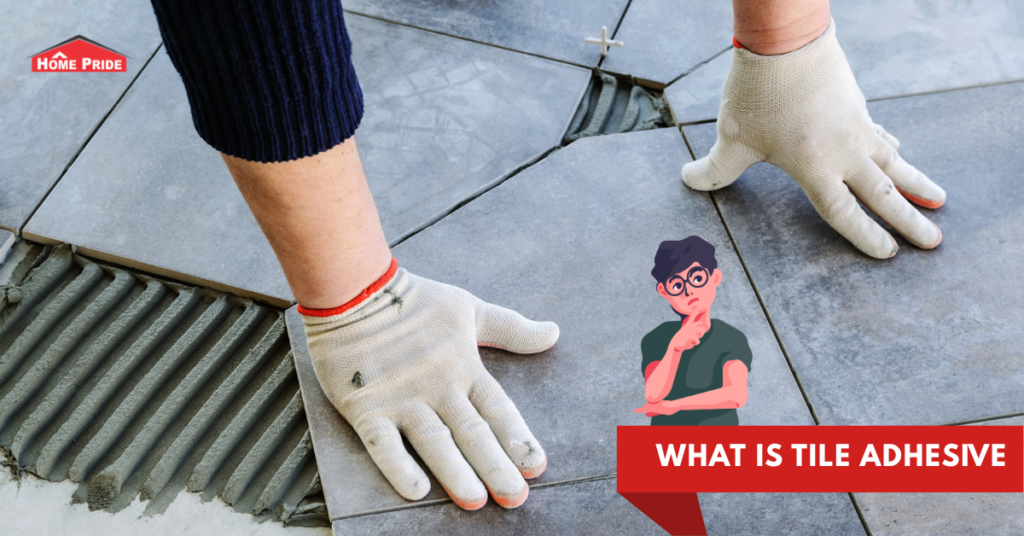
What Is Tile Adhesive?
Adhesive provides superior bonding strength, ensuring tiles remain firmly fixed for years. Polymer additives prevent tile loosening, hollow sounds, and cracks.
Tile Adhesive vs Cement Mortar
Modern tiles like vitrified, porcelain, and large-format tiles require strong adhesion. Adhesive distributes weight evenly, preventing tile slippage and breakage.
Faster and Easier Application
Adhesive comes as a ready-mix solution, reducing on-site preparation time. It improves construction speed and maintains uniform quality across the project.
Reduced Material Wastage
Since adhesive is pre-formulated, it minimizes wastage and overuse. Cement mortar, on the other hand, often leads to excess material loss during manual mixing.
Better Flexibility and Crack Resistance
Adhesive can absorb minor structural movements, making it ideal for high-traffic areas, bathrooms, balconies, and external walls.
Improved Water and Heat Resistance
adhesive offers better resistance to moisture, temperature changes, and humidity, especially important in Indian climate conditions.
Where Can Adhesive Be Used?
adhesive is suitable for:
- Floor tiles
- Wall tiles
- Bathroom and kitchen tiles
- Vitrified and porcelain tiles
- Ceramic and mosaic tiles
Why Builders and Contractors Prefer Adhesive
Builders and contractors choose tile adhesive because it:
- Ensures long-lasting tile fixing
- Reduces labor effort
- Improves work efficiency
- Enhances overall finish quality
Final Thoughts
adhesive is a modern, reliable, and efficient alternative to traditional cement mortar. It provides strong bonding, faster installation, less wastage, and better durability, making it the preferred choice for today’s construction needs.
If you want high-quality tile installation with long-term performance, adhesive is undoubtedly the better solution.



0 Comment