
Best Tile Adhesive for Ceramic Tiles: A Complete Guide for Builders
In modern construction, tile installation quality depends heavily on selecting the right bonding material. The best tile adhesive for ceramic tiles provides strong grip, better durability, improved finishing, and long-lasting performance compared to traditional installation methods.
For builders and contractors, choosing the correct ceramic tile adhesive is essential because tiles are expected to maintain their appearance and strength for many years. Poor-quality adhesive selection can lead to problems such as loose tiles, cracks, hollow sounds, and costly repairs.
This guide explains how to choose the right tile adhesive, its benefits, types, applications, and important factors builders should consider before installation.
What Is Tile Adhesive?
Tile adhesive is a specially formulated construction material used for fixing ceramic tiles on floors and walls. It contains cement, graded minerals, polymers, and performance-enhancing additives that improve bonding strength and workability.
Unlike traditional cement mortar, professional tile adhesive provides:
- Stronger tile bonding
- Better surface coverage
- Improved flexibility
- Faster installation
- Reduced tile movement
- Better durability
It is widely used in residential, commercial, and industrial construction projects.
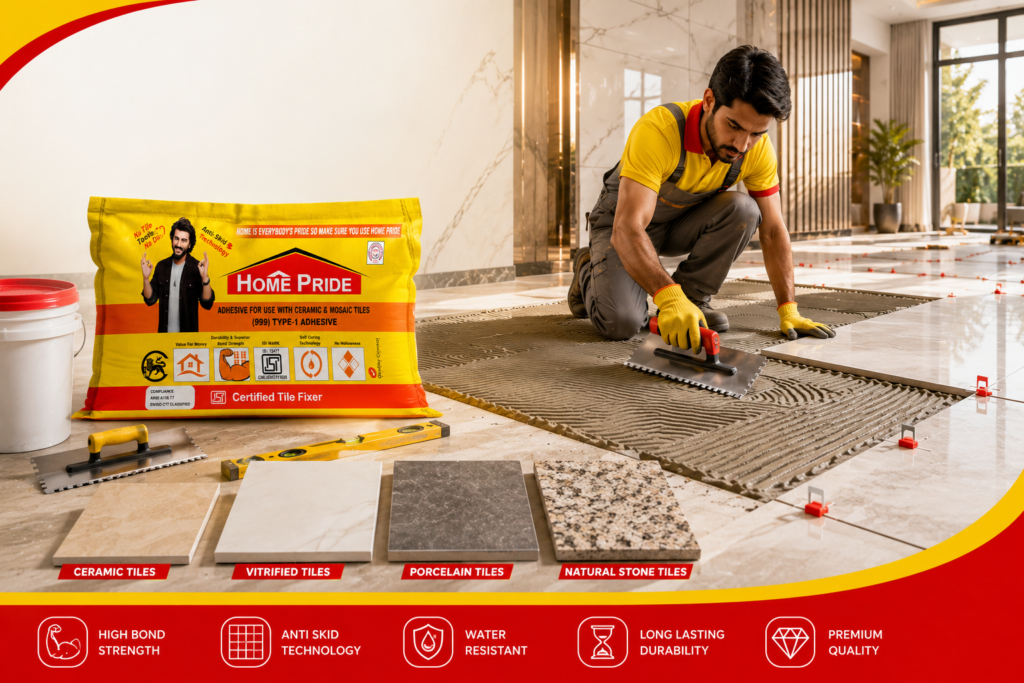
Why Ceramic Tiles Need the Right Adhesive
Ceramic tiles are popular because they provide durability, easy maintenance, and attractive finishes. However, their performance depends on proper installation.
Using the correct ceramic tile adhesive helps ensure:
Strong Bonding
A quality adhesive creates a secure connection between the tile and the surface, reducing the possibility of tile detachment.
Better Durability
The right adhesive helps tiles withstand daily usage, temperature changes, and moisture exposure.
Improved Finishing
Proper adhesive application prevents uneven tile placement and improves overall appearance.
Reduced Maintenance
Strong installation reduces future repair requirements and replacement costs.
Types of Tile Adhesive for Ceramic Tiles
Different construction requirements need different adhesive solutions.
Cement Based Tile Adhesive
Cement-based tile adhesive is commonly used for ceramic tile installation. It provides reliable bonding strength and is suitable for many residential and commercial applications.
Suitable for:
- Floor tiles
- Wall tiles
- Indoor applications
- Residential projects
Polymer Modified Tile Adhesive
Polymer-modified formulas offer enhanced flexibility and improved bonding performance.
Benefits include:
- Better adhesion
- Higher flexibility
- Improved moisture resistance
- Better performance on challenging surfaces
It is suitable for areas where additional strength is required.
Waterproof Tile Adhesive
Water-resistant adhesive solutions are ideal for moisture-prone areas.
Common applications:
- Bathrooms
- Kitchens
- Wash areas
- Balconies
- Wet zones
Flexible Tile Adhesive
Flexible adhesives are designed for areas where slight movement or temperature variation may occur.
They help reduce stress between the tile and substrate.
How to Select the Best Tile Adhesive for Ceramic Tiles
Builders should consider several factors before selecting a tile adhesive.
1. Tile Size
Tile dimensions affect adhesive requirements.
Small and medium ceramic tiles may require standard adhesive solutions, while larger tiles often need higher-performance products.
2. Installation Location
The application area plays an important role.
Wall Installation
Wall tiles require adhesive with good grip and anti-slip properties.
Floor Installation
Floor applications require strong bonding and load resistance.
Wet Areas
Bathrooms and kitchens require moisture-resistant solutions.
3. Surface Condition
The installation surface should be:
- Clean
- Dry
- Dust-free
- Properly prepared
- Strong enough to support tiles
Surface preparation directly impacts adhesive performance.
Benefits of Using Professional Tile Adhesive
Faster Installation Process
Tile adhesive allows installers to work efficiently with consistent results.
Better Coverage
Proper adhesive application improves contact between tile and surface.
Reduced Tile Failure
Strong bonding reduces the chances of tiles becoming loose.
Improved Project Quality
Professional installation improves the overall finish of construction projects.
Long-Term Performance
A suitable adhesive helps maintain tile strength and appearance for years.
Tile Adhesive Application Process
Correct application is important for achieving maximum performance.
Step 1: Prepare the Surface
Remove:
- Dust
- Oil
- Loose particles
- Uneven material
A clean surface improves bonding.
Step 2: Mix the Adhesive Properly
Follow recommended mixing instructions to achieve the correct consistency.
Step 3: Apply Adhesive Evenly
Use the appropriate tool to spread adhesive uniformly on the surface.
Step 4: Place Ceramic Tiles
Position tiles carefully and maintain proper alignment.
Step 5: Allow Proper Setting Time
Avoid disturbing tiles before the adhesive has achieved sufficient strength.
Common Problems Caused by Wrong Tile Adhesive Selection
Choosing an unsuitable adhesive can create several issues:
- Loose tiles
- Tile movement
- Cracks
- Poor finishing
- Reduced lifespan
- Water-related damage
Selecting the right tile fixing adhesive prevents these common construction problems.
Why Builders Should Use Quality Tile Adhesive
For construction professionals, quality materials directly impact project reputation.
A reliable professional tile adhesive provides:
- Consistent performance
- Better installation results
- Reduced repair costs
- Higher customer satisfaction
- Improved project durability
Tile Adhesive vs Traditional Cement Mortar
Feature | Tile Adhesive | Traditional Cement Mortar |
Bond Strength | High | Variable |
Application | Easier | More labour intensive |
Thickness Required | Lower | Higher |
Consistency | Uniform | Depends on mixing |
Professional Use | Preferred | Limited |
Modern construction practices increasingly prefer tile adhesive because of better reliability and efficiency.
Frequently Asked Questions (FAQ)
What is the best tile adhesive for ceramic tiles?
The best tile adhesive depends on tile size, installation area, surface type, and project requirements. A suitable ceramic tile adhesive should provide strong bonding, durability, and proper flexibility.
Can tile adhesive be used for floor tiles?
Yes, floor tile adhesive is specifically designed to provide strong bonding for floor applications.
Is waterproof tile adhesive suitable for bathrooms?
Yes, waterproof tile adhesive is commonly used in moisture-prone areas such as bathrooms and kitchens.
How long does tile adhesive last?
With proper selection, application, and installation practices, tile adhesive can provide long-lasting performance.
Why is tile adhesive better than cement for tiles?
Tile adhesive offers better consistency, stronger bonding, and easier installation compared to traditional cement methods.
Final Thoughts
Choosing the best tile adhesive for ceramic tiles is an important step for achieving strong, durable, and professional tile installation. Builders and contractors should select adhesive based on tile type, application area, surface condition, and performance requirements.
A high-quality ceramic tile adhesive improves bonding strength, reduces installation problems, and helps maintain the beauty and durability of tiled surfaces for years.
With proper product selection and correct application methods, tile adhesive becomes an essential solution for modern construction projects.



0 Comment