
Quick Answer
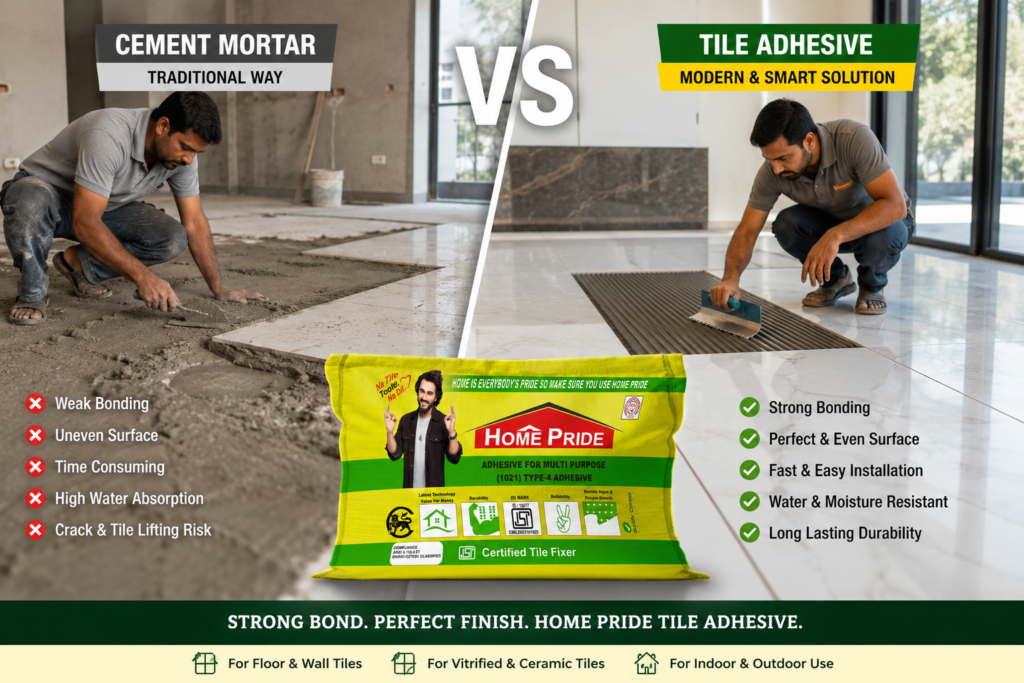
Tile adhesive is generally better than traditional cement mortar for most modern tile installation projects. It offers stronger bonding, better flexibility, improved water resistance, faster installation, and longer durability. While cement mortar is still used in some construction projects, tile adhesive provides superior performance for ceramic, vitrified, porcelain, and natural stone tiles.
Introduction
Choosing the right bonding material is one of the most important decisions during tile installation. Many homeowners, builders, architects, and contractors often ask: Tile Adhesive vs Cement – Which is Better?
For years, cement-sand mortar was the standard method for fixing tiles. However, advancements in construction chemicals have introduced high-performance tile adhesives that provide stronger and more reliable tile installations.
At Home Pride, we help construction professionals and property owners choose the best tile fixing solutions for long-lasting results.
What is Tile Adhesive?
Tile adhesive is a polymer-modified bonding material specially designed to fix tiles securely on floors, walls, and other surfaces.
Modern tile adhesives are suitable for:
- Ceramic Tiles
- Vitrified Tiles
- Porcelain Tiles
- Marble Tiles
- Granite Tiles
- Large Format Tiles
- Natural Stone
Tile adhesives are available in ready-to-use and powder-based formulations that offer excellent adhesion and durability.
What is Cement Mortar?
Cement mortar is a mixture of cement, sand, and water used traditionally for tile installation.
Although cement mortar has been widely used in the construction industry, it has certain limitations when compared with modern tile adhesives, especially for large-format and low-absorption tiles.
Tile Adhesive vs Cement: Detailed Comparison
1. Bonding Strength
Tile Adhesive
- High bonding performance
- Strong grip on tile surfaces
- Suitable for vitrified and porcelain tiles
Cement Mortar
- Lower bonding efficiency
- May lead to tile debonding over time
Winner: Tile Adhesive
2. Water Resistance
Tile Adhesive
- Excellent moisture resistance
- Helps prevent seepage issues
Cement Mortar
- Can absorb water over time
Winner: Tile Adhesive
3. Flexibility
Tile Adhesive
- Absorbs minor structural movement
- Reduces cracking risks
Cement Mortar
- Rigid structure
- More susceptible to cracks
Winner: Tile Adhesive
4. Installation Speed
Tile Adhesive
- Easy mixing and application
- Faster installation process
Cement Mortar
- Requires extensive preparation
- More labor-intensive
Winner: Tile Adhesive
5. Tile Compatibility
Tile Adhesive
- Works well with ceramic, vitrified, porcelain, and natural stone tiles
Cement Mortar
- Less effective for modern large-format tiles
Winner: Tile Adhesive
6. Long-Term Durability
Tile Adhesive
- Provides long-lasting performance
- Reduces maintenance requirements
Cement Mortar
- Higher risk of hollow tiles and tile lifting
Winner: Tile Adhesive
Why Builders Prefer Tile Adhesive Today
The construction industry is rapidly shifting toward advanced tile fixing systems. Professional builders and contractors prefer tile adhesive because it:
- Improves project quality
- Saves installation time
- Reduces labor costs
- Delivers stronger tile bonding
- Enhances overall durability
These benefits make tile adhesive the preferred choice for modern residential, commercial, and industrial projects.
Common Problems Solved by Tile Adhesive
High-quality tile adhesive helps prevent:
- Tile lifting
- Tile popping
- Hollow sounds beneath tiles
- Water seepage
- Surface cracking
- Weak bonding
- Uneven tile installation
Best Tile Adhesive for Floor Tiles
For floor tile applications, experts recommend using polymer-modified tile adhesive because it offers:
- Superior bonding strength
- Better flexibility
- Water resistance
- Long-term durability
Home Pride Tile Adhesive solutions are developed to meet the demands of modern flooring and wall tile installations across residential, commercial, and industrial projects.
Why Choose Home Pride Tile Adhesive?
Home Pride is committed to providing reliable construction chemical solutions designed for superior performance.
Benefits of Home Pride Tile Adhesive
- Advanced Polymer Technology
- High Bonding Strength
- Excellent Workability
- Water-Resistant Formula
- Crack-Resistant Performance
- Suitable for Floor and Wall Tiles
- Long Service Life
- Consistent Quality Standards
Whether you are installing ceramic tiles, vitrified tiles, porcelain tiles, or natural stone, Home Pride offers dependable tile adhesive solutions for every application.
Frequently Asked Questions
Is tile adhesive stronger than cement?
Yes. Tile adhesive provides significantly stronger bonding compared to traditional cement mortar, especially for vitrified and porcelain tiles.
Can tile adhesive replace cement mortar?
In most tile installation projects, tile adhesive can effectively replace cement mortar and deliver better performance.
Which is better for floor tiles: tile adhesive or cement?
Tile adhesive is generally considered the better option due to its superior adhesion, flexibility, and durability.
Does tile adhesive prevent tile cracking?
Quality tile adhesive helps reduce tile cracking by absorbing minor structural movements and temperature changes.
What is the best tile adhesive for vitrified tiles?
Polymer-modified tile adhesive is widely recommended for vitrified tile installations because of its strong bonding capability.
Conclusion
When comparing Tile Adhesive vs Cement, tile adhesive clearly offers superior bonding strength, water resistance, flexibility, durability, and ease of installation. For modern construction projects, it has become the preferred choice among builders, contractors, architects, and homeowners.
If you are looking for reliable tile fixing solutions, Home Pride Tile Adhesive provides the performance, quality, and durability required for long-lasting tile installations.



0 Comment