
Tap Cleaner: The Ultimate Guide to Keep Your Taps Sparkling Clean (2026)
Tap Cleaner: Complete Guide to Cleaning Bathroom & Kitchen Taps
Your bathroom and kitchen taps are among the most frequently used fixtures in your home. Over time, they accumulate hard water stains, soap scum, fingerprints, grease, rust, and limescale, making even expensive faucets look dull and dirty.
A high-quality tap cleaner restores shine, removes stubborn stains, and protects the surface from future buildup. Whether you own stainless steel, chrome, brass, or matte-finish taps, choosing the right cleaner helps maintain both appearance and durability.
In this comprehensive guide, you’ll learn everything about tap cleaners, how they work, their benefits, the best cleaning practices, and how to choose the right product for your home.
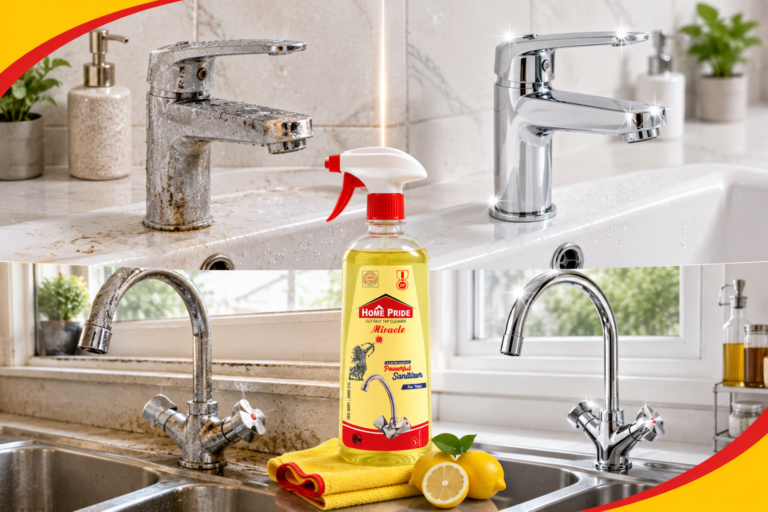
What Is a Tap Cleaner?
A tap cleaner is a specially formulated cleaning product designed to remove:
- Hard water stains
- Mineral deposits
- Limescale
- Rust spots
- Soap scum
- Grease
- Water marks
- Fingerprints
- Dirt buildup
Unlike ordinary household cleaners, a dedicated tap cleaner cleans delicate faucet surfaces without scratching or damaging their finish.
Why Do Taps Become Dirty?
Many homeowners notice white stains or dull patches on taps after just a few weeks. These deposits are usually caused by minerals present in hard water.
Common causes include:
- Hard water minerals
- Soap residue
- Toothpaste splashes
- Grease from cooking
- Dust accumulation
- Rust from old plumbing
- Daily water spots
Without regular cleaning, these deposits become difficult to remove.
Benefits of Using a Tap Cleaner
Using a professional tap cleaner offers several advantages.
1. Removes Hard Water Stains
Hard water leaves behind calcium and magnesium deposits that create white stains. A quality cleaner dissolves these minerals effectively.
2. Restores Original Shine
Chrome and stainless steel taps regain their glossy appearance after proper cleaning.
3. Prevents Limescale Build-Up
Regular cleaning stops mineral deposits from becoming permanent.
4. Extends Tap Life
Removing corrosive buildup helps prevent premature wear and corrosion.
5. Improves Hygiene
Kitchen and bathroom taps can harbor bacteria. Regular cleaning keeps frequently touched surfaces more hygienic.
Best Types of Tap Cleaners
Different tap materials require different cleaning solutions.
Stainless Steel Tap Cleaner
Ideal for:
- Modern kitchens
- Commercial sinks
- Steel faucets
Benefits:
- Removes fingerprints
- Restores shine
- Prevents corrosion
Chrome Tap Cleaner
Chrome finishes require non-abrasive cleaning formulas that protect the reflective surface while removing stains.
Brass Tap Cleaner
Brass fixtures benefit from gentle cleaners that preserve their warm finish without causing discoloration.
Matte Black Tap Cleaner
Matte finishes need pH-balanced products that clean without leaving streaks or damaging the coating.
How to Clean Taps Properly
Follow these simple steps for the best results.
Step 1
Remove loose dust using a soft microfiber cloth.
Step 2
Apply the tap cleaner evenly over the entire surface.
Step 3
Allow the cleaner to work for 2–5 minutes, following the product instructions.
Step 4
Use a soft sponge or cloth to gently wipe away stains.
Step 5
Rinse thoroughly with clean water.
Step 6
Dry the tap immediately with a microfiber towel to prevent new water spots.
Common Tap Problems Solved by Tap Cleaner
Hard Water Stains
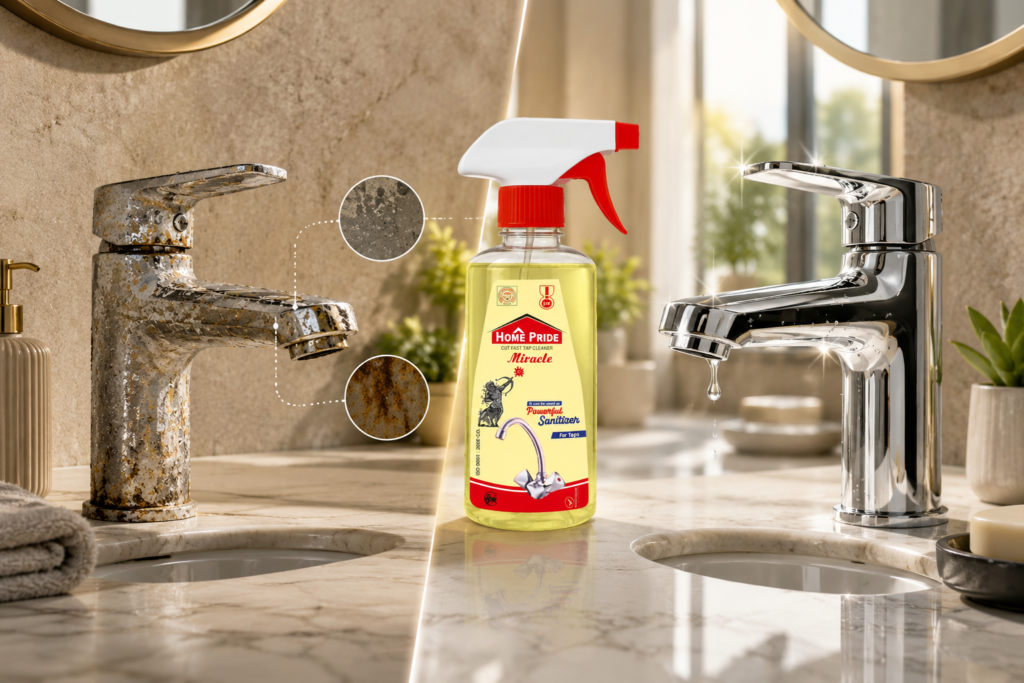
Mineral deposits create cloudy white patches. Acid-based cleaning formulas safely dissolve these stains.
Rust Marks
Quality cleaners remove light rust while protecting metal surfaces.
Soap Scum
Bathroom taps often collect soap residue that leaves a dull film.
Water Spots
Daily wiping combined with regular cleaning keeps taps spotless.
Fingerprints
Modern stainless steel taps easily attract fingerprints. Dedicated cleaners restore a clean, polished look.
Where Can You Use Tap Cleaner?
A quality tap cleaner is suitable for:
- Bathroom taps
- Kitchen faucets
- Sink mixers
- Shower fixtures
- Basin taps
- Washroom fittings
- Utility sinks
- Stainless steel fixtures
- Chrome accessories
How Often Should You Clean Your Taps?
Cleaning frequency depends on water quality and usage.
Water Type | Recommended Cleaning |
Hard Water | 2–3 times per week |
Moderate Water | Once per week |
Soft Water | Every 10–14 days |
Regular maintenance prevents stubborn stains from forming.
DIY vs Professional Tap Cleaner
Many people use homemade remedies such as vinegar or lemon juice. While these can remove light mineral deposits, they may not be suitable for all finishes and are often less effective against heavy buildup.
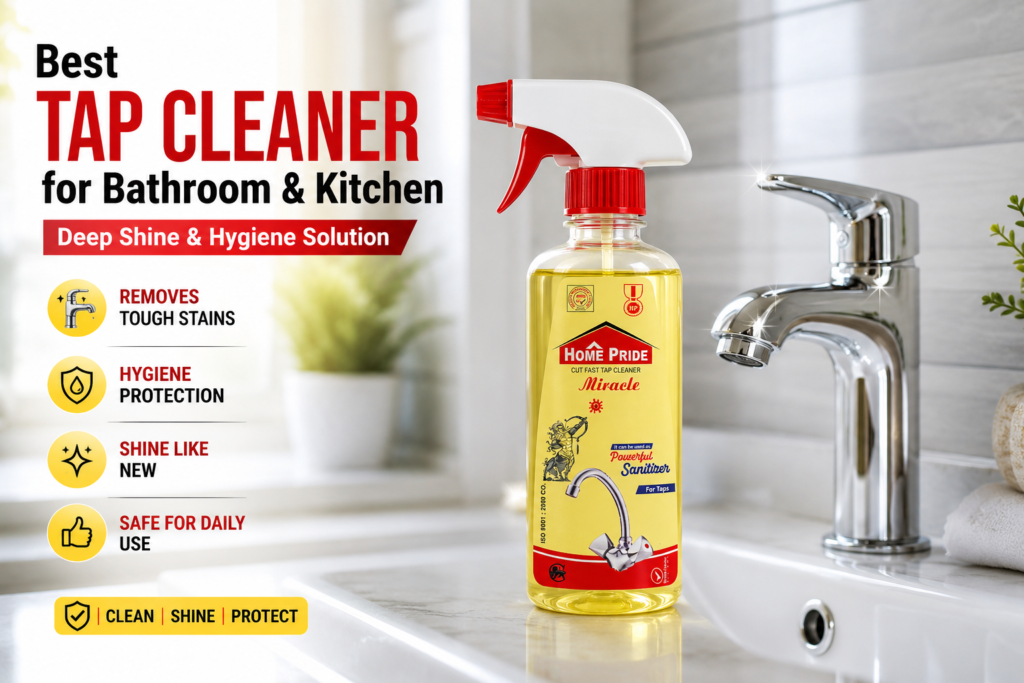
A professional tap cleaner is formulated to clean efficiently while protecting the surface when used as directed.
Features to Look for in the Best Tap Cleaner
Choose a product that offers:
- Fast stain removal
- Limescale cleaning
- Rust removal
- Non-scratch formula
- Safe for stainless steel
- Safe for chrome
- Pleasant fragrance
- Easy spray application
- Long-lasting shine
- Residue-free finish
Mistakes to Avoid
Avoid these common errors:
- Using steel wool
- Scrubbing with abrasive pads
- Leaving cleaner on too long
- Mixing cleaning chemicals
- Forgetting to rinse
- Allowing water to air dry on the tap
Proper cleaning helps maintain the original finish.
Expert Tips for Long-Lasting Shine
- Wipe taps dry after each use.
- Use a microfiber cloth instead of rough fabrics.
- Clean regularly rather than waiting for heavy buildup.
- Address stains as soon as they appear.
- Follow the cleaner’s instructions for the best results.
Frequently Asked Questions (FAQ)
What is the best tap cleaner for hard water stains?
A cleaner designed to remove mineral deposits and limescale works best for hard water stains while protecting the tap’s finish.
Can I use tap cleaner on stainless steel?
Yes. Choose a cleaner labeled safe for stainless steel and follow the usage instructions.
Does tap cleaner remove rust?
Many tap cleaners can remove light surface rust. Heavier corrosion may require a specialized rust-removal product.
Is tap cleaner safe for bathroom taps?
Yes. Most quality tap cleaners are suitable for bathroom taps, including chrome and stainless steel models, when used correctly.
How often should I clean my taps?
For homes with hard water, cleaning two to three times a week helps prevent stubborn mineral buildup. In areas with softer water, once a week or every two weeks is often sufficient.
Final Thoughts
A clean tap enhances the appearance of your bathroom and kitchen while helping preserve the finish of your fixtures. Regular use of a quality tap cleaner removes hard water stains, limescale, soap scum, and everyday grime before they become difficult to clean.
By selecting the right cleaner for your tap material and following a consistent maintenance routine, you can keep your faucets looking bright, hygienic, and well-maintained for years. Whether you’re cleaning stainless steel, chrome, brass, or matte finishes, the right tap cleaner makes the task quicker, safer, and more effective.



0 Comment