
Quick Answer
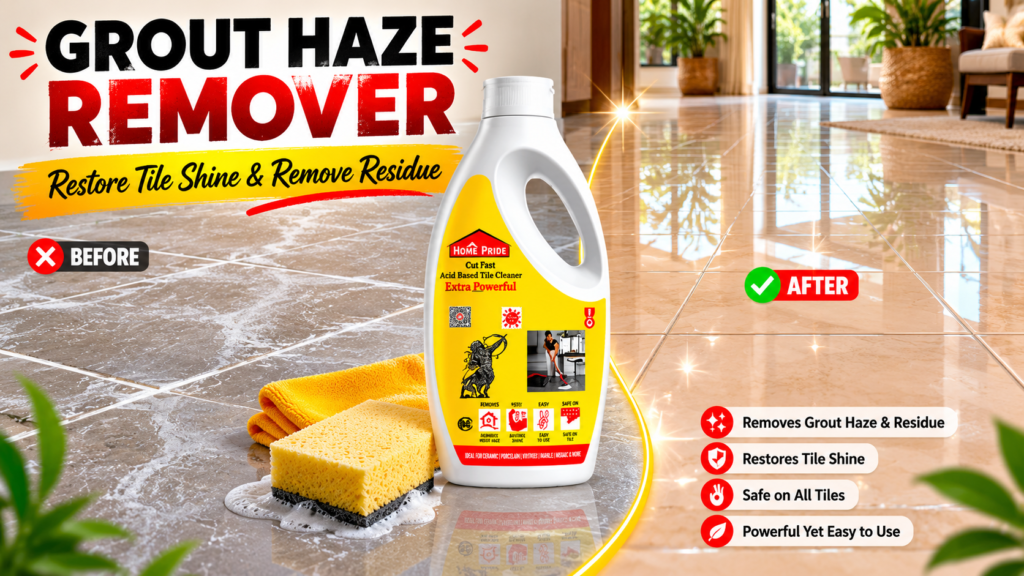
A grout haze remover is a specialized cleaning solution that removes the thin, cloudy film left behind after grouting tiles. It helps restore the original shine of ceramic, porcelain, marble, and natural stone surfaces while preventing residue buildup and maintaining a clean, professional finish.
Introduction
After tile installation, many homeowners notice a white or cloudy layer on the tile surface. This residue, known as grout haze, can make newly installed tiles look dull and unfinished. Using the right grout haze remover is one of the most effective ways to restore tile shine and maintain the appearance of your floors and walls.
Whether you’re cleaning bathroom tiles, kitchen backsplashes, porcelain flooring, or natural stone surfaces, proper grout haze removal helps preserve both the beauty and durability of your tiles.
What Is Grout Haze?
Grout haze is a thin layer of grout residue that remains on the surface of tiles after the grouting process. It usually appears as a white, dusty, or cloudy film that reduces the natural shine of the tile.
Unlike excess grout trapped between tile joints, grout haze sits on top of the tile surface and can become difficult to remove if left untreated.
Common Signs of Grout Haze
- Cloudy or dull tile appearance
- White film on dark-colored tiles
- Reduced shine on glossy surfaces
- Visible residue after tile installation
What Causes Grout Haze?
Several factors contribute to grout haze formation.
Improper Post-Grouting Cleanup
Failing to clean excess grout during installation is one of the most common causes.
Excess Grout Residue
Too much grout left on the tile surface can dry and form a stubborn film.
Delayed Cleaning
The longer grout residue remains on the tiles, the harder it becomes to remove.
Poor-Quality Grout Materials
Some grout products leave behind more residue than others, increasing the likelihood of haze formation.
Types of Grout Haze
Understanding the type of grout haze helps determine the most effective cleaning method.
Cement-Based Grout Haze
This is the most common type and can usually be removed using standard grout haze removers.
Epoxy Grout Haze
Epoxy haze is more difficult to remove and often requires professional-grade cleaning products.
What Is a Grout Haze Remover?
A grout haze remover is a specially formulated cleaning solution designed to dissolve and remove grout residue without damaging tile surfaces.
It is commonly used on:
- Ceramic tiles
- Porcelain tiles
- Marble tiles
- Natural stone surfaces
- Bathroom floors
- Kitchen walls and backsplashes
- Outdoor tile installations
Benefits of Using a Grout Haze Remover
Using the correct grout residue cleaner offers several benefits:
- Restores the original shine of tiles
- Removes stubborn grout film effectively
- Saves time compared to manual scrubbing
- Improves the appearance of newly installed tiles
- Helps prevent permanent staining
- Safe for most tile surfaces when used correctly
How to Remove Grout Haze (Step-by-Step Guide)
Step 1: Allow Proper Grout Curing
Wait at least 24–48 hours after grouting before using a grout haze remover.
Step 2: Remove Loose Dust
Sweep or wipe the surface to remove dust and debris.
Step 3: Apply the Grout Haze Remover
Apply the cleaning solution evenly across the affected area according to the product instructions.
Step 4: Gently Scrub the Surface
Use a soft sponge or non-abrasive scrub pad to loosen residue.
Step 5: Rinse Thoroughly
Wash the area with clean water to remove any remaining solution.
Step 6: Dry and Inspect
Dry the tiles with a clean cloth and inspect for any remaining haze.
Best Grout Haze Removal Methods by Tile Type
Ceramic Tiles
Most ceramic tiles respond well to standard grout haze removers and mild cleaning solutions.
Porcelain Tiles
Porcelain tiles are durable and can generally handle professional-grade cleaners.
Marble Tiles
Use only pH-neutral or stone-safe grout haze removers to avoid damage.
Natural Stone Tiles
Always test any cleaning product on a small hidden area before full application.
DIY Cleaning
Suitable for:
- Light grout haze
- Small residential projects
- Recently installed tiles
Professional Cleaning
Recommended for:polished tile surfaces.
Skipping the Final Rinse
- Heavy grout residue
- Epoxy grout haze
- Large commercial projects
- Delicate natural stone surfaces
Expert Tips for Better Results
Based on professional tile maintenance practices, grout haze is usually easiest to remove within the first few days after installation.
For the best results:
- Test the cleaner on a small area first
- Follow manufacturer instructions carefully
- Wear protective gloves
- Avoid abrasive metal brushes
- Rinse thoroughly after cleaning
Common Mistakes to Avoid
Using Harsh Chemicals
Strong acidic cleaners can damage marble and natural stone surfaces.
Waiting Too Long
Delaying grout haze removal makes cleaning more difficult.
Scrubbing Aggressively
Excessive scrubbing may scratch Failing to rinse properly can leave additional residue behind.
Why Choose a Professional Grout Haze Remover?
Professional-grade grout haze removers provide deeper cleaning and more reliable results than many household cleaning methods.
Benefits include:
- Faster residue removal
- Reduced risk of tile damage
- Improved surface appearance
- Long-lasting shine
- Better performance on stubborn haze
Frequently Asked Questions
What is the best grout haze remover?
The best grout haze remover depends on the tile type and severity of the residue. Professional-grade cleaners typically provide the most effective results.
Can grout haze be removed after it has dried?
Yes, dried grout haze can usually be removed using a suitable grout haze remover and proper cleaning techniques.
Is grout haze remover safe for marble?
Yes, provided you use a stone-safe or pH-neutral product and test it first.
How long should I wait before removing grout haze?
Most manufacturers recommend waiting 24–48 hours after grouting.
Can vinegar remove grout haze?
A diluted vinegar solution may help with light grout haze on some surfaces, but it should not be used on marble or natural stone.
What is the difference between grout haze and grout residue?
Grout haze is a thin film left on the tile surface, while grout residue may refer to larger amounts of excess grout remaining after installation.
Conclusion
Grout haze can significantly reduce the appearance of newly installed tiles, but the right grout haze remover can restore their original shine quickly and safely. Whether you’re working with ceramic, porcelain, marble, or natural stone surfaces, proper cleaning techniques and regular maintenance will help keep your tiles looking clean, polished, and long-lasting.



0 Comment