
Bathroom Waterproofing Chemical: Can It Stop Leakage Without Removing Tiles?
A bathroom waterproofing chemical can help stop leakage without removing tiles when the problem is limited to treatable joints or surface defects and the underlying waterproofing remains sound. It cannot reliably solve every leak. Broken pipes, loose tiles and a failed membrane beneath the floor may require opening the affected area.
The first step is finding the source of water, rather than buying a coating and applying it everywhere. Home Pride offers construction chemicals, including waterproofing coatings and grouts, but selecting a suitable product depends on the defect and the surface being treated.
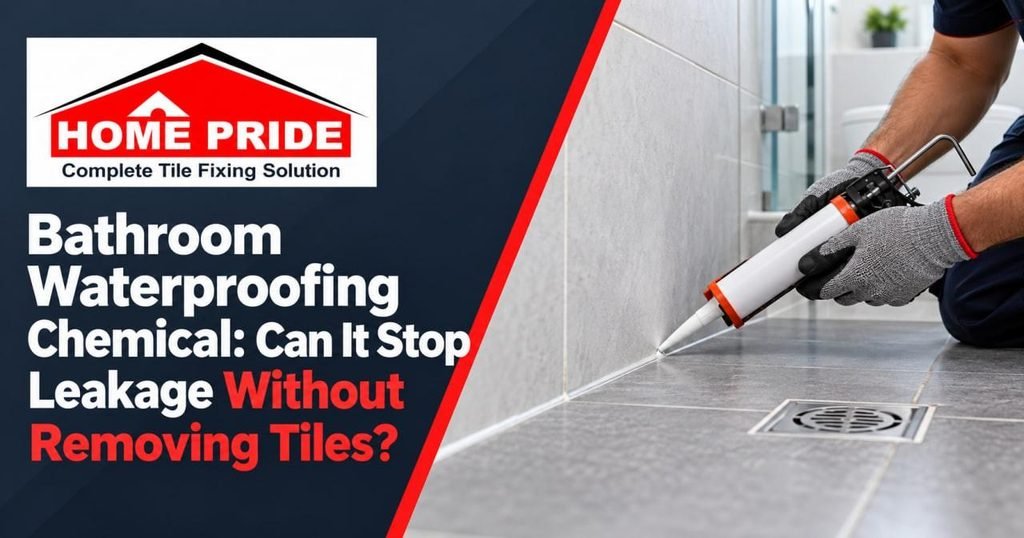
This guide explains when repairs without tile removal are practical, when deeper work is necessary and what to check before choosing a treatment.
Why Does a Bathroom Leak?
Bathroom floors, shower walls, drains and pipe openings experience repeated water exposure. Leakage can develop when one part of this system fails.
Common causes include:
- Damaged or missing grout between tiles.
- Failed seals around sanitary fittings.
- Gaps at floor-to-wall junctions.
- Poor detailing around drains and pipe penetrations.
- Cracks or discontinuities in the waterproofing membrane.
- Leaking concealed water-supply or drainage pipes.
Tiles provide a durable finish, but the tiled surface is not automatically a complete waterproof barrier. Protection also depends on the membrane underneath and the treatment of joints and openings.
A damp patch is a symptom, not a diagnosis. Water can travel before appearing on an adjoining wall or the ceiling below.
When Can Leakage Be Repaired Without Removing Tiles?
Repairs without demolition are most reasonable when inspection identifies a limited, accessible defect.
| Bathroom condition | Is repair without tile removal practical? |
| Deteriorated grout with sound tiles and intact underlying waterproofing | Potentially, through suitable joint repair |
| Failed seal around an accessible fitting | Often, after confirming the leak source |
| Localised gap at a junction | May be possible with compatible detailing |
| Concealed plumbing leak | Requires plumbing repair; access may be necessary |
| Widespread membrane failure beneath tiles | Surface treatment is unlikely to provide a dependable solution |
| Loose tiles or damaged substrate | Removal and substrate repair may be required |
A Waterproofing Chemical should address the identified defect. Applying an unspecified coating over the entire floor may hide the symptoms temporarily without repairing the cause.
Which Products Are Used for Bathroom Leakage?
Different materials perform different jobs. A membrane, grout and sealant should not be treated as interchangeable products.
Tile-Joint Grouts
Suitable grout repairs can help where deteriorated tile joints are the identified problem. Remove failed material and prepare the joints according to the replacement product’s instructions.
Epoxy grout can offer useful water and chemical resistance, but it does not replace an under-tile waterproofing membrane.
When comparing Home Pride grouts, check joint-width suitability, substrate requirements and cleaning instructions. Product selection should follow the application rather than the assumption that any grout will stop leakage.
Flexible Joint Sealants
Movement junctions and connections around fittings may require a compatible flexible sealant. Rigid grout can crack where movement occurs.
Remove failed sealant, prepare the joint and use the specified backing or joint dimensions where required. Covering old, poorly bonded sealant with another layer is not a dependable repair.
Waterproofing Membrane Coatings
Membranes create a waterproof layer over an approved substrate. Some systems are designed beneath tiles; others permit particular exposed applications.
A bathroom waterproofing chemical intended for concrete should not automatically be applied over glazed tiles. Adhesion, moisture conditions and compatibility must be confirmed.
Specialist Injection Materials
Injection treatments may suit certain diagnosed cracks or leakage paths. They require professional assessment and controlled installation.
They are not a universal alternative to replacing failed waterproofing, and they cannot repair a broken plumbing connection.
Where Does Shield Crete Fit?
Home Pride describes Shield Crete as a two-component acrylic polymer-modified cementitious membrane coating. Its waterproofing range includes bathroom applications, while the product description identifies flexibility for hairline cracks.
These details make it relevant to bathroom waterproofing, but they do not establish that it can be brushed over existing tiles to repair every leak.
Before specifying Shield Crete, confirm the approved substrate, surface preparation, component ratio, coating thickness and protection requirements. Treating a prepared concrete surface before tiling is different from repairing an occupied bathroom without disturbing its finish.
How to Identify the Source Before Treatment
1. Observe When Dampness Appears
Note whether leakage follows showering, floor washing, basin use or toilet flushing.
Persistent dampness while the bathroom is unused may indicate a supply-line leak, although retained moisture can also take time to dry.
2. Inspect Accessible Details
Check grout, perimeter seals, drain connections and pipe openings. Look for missing material, visible gaps and loose tiles.
These observations help identify areas for investigation, but they do not prove that the concealed membrane is intact.
3. Arrange Plumbing Checks
Have a plumber inspect suspected supply or drainage leaks. Controlled testing can help distinguish plumbing problems from waterproofing failure.
Do not seal over an active plumbing defect and expect the coating to solve it.
4. Define the Repair Scope
Ask the contractor to explain the diagnosed cause, proposed materials and reasons for choosing surface repair or tile removal.
Photographs and written findings make the recommendation easier to assess.
What to Check Before Buying a Chemical
Choose materials using technical instructions rather than broad “permanent leakage solution” claims.
Confirm:
- Approved surface: concrete, screed, tile or another substrate.
- Application location: under tiles, exposed joints or a specified repair area.
- Preparation: cleaning, removal of old material and moisture requirements.
- Coverage: consumption for the complete system.
- Compatibility: primer, membrane, adhesive, grout and sealant.
- Curing: waiting time before water exposure or tiling.
- Limitations: movement, immersion and substrate conditions.
Ask Home Pride for current technical guidance for the selected product. Mixing ratios and coverage should not be copied from another manufacturer’s material.
Application and Testing: What Matters?
For accessible joint repairs, remove failed material, prepare the surface and apply the compatible replacement as instructed.
For membrane work, the substrate must be sound and properly prepared. Corners, drains and penetrations need detailing alongside the main coating.
Follow prescribed consumption and thickness. Two thin coats do not necessarily equal an adequate waterproof layer.
Protect fresh material during curing. Dry-to-touch does not mean ready for shower use.
Testing should match the repair and product instructions. Where a controlled water test is appropriate, arrange it after curing and manage the risk of further leakage into adjoining rooms or the floor below.
When Should Tiles Be Removed?
Tile removal may be necessary when the membrane has failed widely, tiles are loose, the substrate is damaged or concealed plumbing needs access.
Limited removal may be enough for a local defect. In other cases, rebuilding the waterproofing layer across the affected area is more dependable than repeated surface treatments.
Compare complete repair costs, including access, plumbing, waterproofing and reinstatement. A cheaper treatment becomes expensive if it leaves the original failure unresolved.
Frequently Asked Questions
1. Can bathroom waterproofing chemicals stop leakage without removing tiles?
Yes, in suitable cases involving accessible joints or limited surface defects. The tiles and underlying waterproofing must remain sound. Failed membranes, damaged substrates and concealed plumbing leaks may require opening the affected area.
2. Which waterproofing chemical is best for bathroom leakage?
The best material depends on the cause. Grout may suit deteriorated tile joints, flexible sealant may suit movement junctions, and a membrane may suit prepared substrates. Choose a product approved for the exact application.
3. Does epoxy grout make a bathroom waterproof?
Epoxy grout can improve resistance at tile joints, but it does not create a complete waterproofing system. The membrane, junctions, drains and pipe openings must also function correctly.
4. Can Shield Crete be applied over existing bathroom tiles?
Confirm this application directly with Home Pride before proceeding. Its description as a cementitious waterproofing coating does not establish approval for glazed tiles. Surface suitability and the actual leak source determine the repair method.
5. How long should bathroom waterproofing dry before use?
Follow the selected product’s curing and water-exposure instructions. Timing varies with formulation, temperature, humidity and installation conditions. Do not restart shower use simply because the surface feels dry.



0 Comment