
Best Waterproofing Chemical for Roof Leakage: Roof and Terrace Guide
The best waterproofing chemical for roof leakage is one that suits your roof’s surface, crack condition, drainage and exposure. Acrylic membranes, polyurethane coatings and polymer-modified cementitious systems offer different properties. Choosing the right chemical matters, but surface preparation and correct application are equally important.
Home Pride offers Shield Crete, a two-component acrylic polymer-modified cementitious waterproofing coating. Understanding where this type of product fits helps you compare solutions and plan treatment around your terrace’s actual condition.
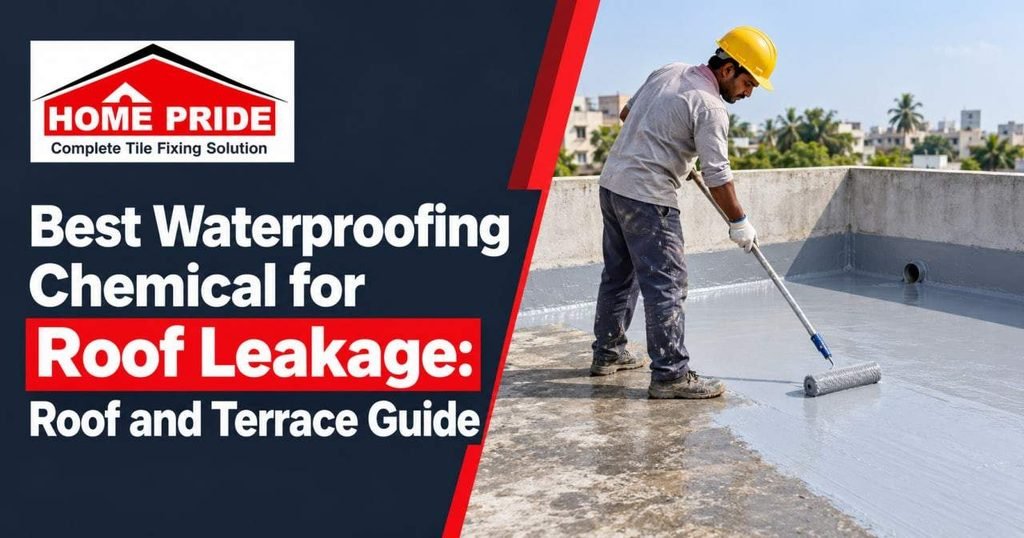
This guide explains the main chemical types, what to check before buying and how to avoid mistakes that allow leakage to return.
Why Does Your Roof Leak?
Roof leakage often starts at a small defect, such as a cracked junction or poorly sealed pipe opening. Water can travel through roof layers before appearing inside, so the ceiling stain may not sit directly below the entry point.
Inspect these areas before selecting a Waterproofing Chemical:
- Cracks in the concrete slab or protective screed.
- Junctions between the terrace and parapet walls.
- Drain outlets and rainwater pipe connections.
- Openings around pipes and tank supports.
- Loose tiles or damaged existing waterproofing.
- Low spots where rainwater collects.
Also note when leakage occurs. Seepage after rainfall suggests an external entry point. Leakage that continues during dry weather may involve plumbing or an overhead tank.
Widening cracks, exposed reinforcement and loose concrete require professional assessment. A waterproof coating cannot restore structural strength or correct a damaged slab.
Main Types of Waterproofing Chemicals for Roofs
Choosing a waterproofing chemical for roof protection starts with understanding the product’s approved uses and installation requirements.
| Chemical type | Potential application | What to check |
| Acrylic liquid membrane | Exposed terraces where the product is approved | UV resistance, drainage and permitted ponding |
| Polyurethane membrane | Roofs needing a flexible waterproof layer | Moisture limits, primer and protective finish |
| Polymer-modified cementitious coating | Prepared concrete and specified protected terrace systems | Crack-bridging limits, curing and covering requirements |
Acrylic Liquid Membranes
Roof-approved acrylic coatings can form a continuous waterproof layer across prepared surfaces. Some formulations also have reflective finishes, although heat reflection and waterproofing are separate performance properties.
Check whether the selected product tolerates temporary standing water and whether it needs protection from regular walking. An exterior wall coating should not be used as a roof membrane unless its manufacturer approves that application.
Polyurethane Membranes
Polyurethane systems can provide flexible membranes that accommodate movement within their tested capabilities. However, products differ in moisture tolerance, sunlight resistance and installation requirements.
Confirm whether the system needs a primer, reinforcement or protective finish. The label “PU waterproofing” alone does not establish suitability for every terrace.
Polymer-Modified Cementitious Coatings
These coatings combine cement-based materials with polymers. Depending on the formulation, they provide water resistance, adhesion and limited crack-bridging flexibility.
Home Pride describes Shield Crete as a coating in this category, with flexibility for hairline cracks. Hairline crack protection should not be confused with repairing structural cracks or treating expansion joints.
Where Shield Crete Fits in Terrace Waterproofing
The brand’s waterproofing range lists roofs and terraces among its applications. Shield Crete is described as a two-component coating for internal and external use.
Before selecting Home Pride Shield Crete, confirm the installation requirements for your project:
- Suitability for the existing surface.
- Whether a protective screed or covering is required.
- Component mixing ratio and usable mixing time.
- Total consumption and required coating thickness.
- Treatment around corners, drains and penetrations.
- Curing time before covering or water testing.
Exact coverage and curing schedules should come from current technical instructions. Do not copy another product’s application method simply because both belong to the same chemical category.
Choosing a Terrace Waterproofing Chemical
The right Terrace Waterproofing Chemical must suit how the terrace will be finished and used.
Bare Concrete Terrace
Check surface strength, moisture, cracks and drainage. Remove weak or poorly bonded material before applying the waterproofing system.
A coating applied over loose concrete may detach with the surface underneath, even when the chemical itself is suitable.
Tiled Terrace
Determine whether leakage comes from tile joints, roof junctions or failed waterproofing beneath the tiles.
Repairing grout may help a local joint defect, but it may not resolve an underlying membrane failure. Applying a coating over tiles also requires explicit approval for that substrate.
Frequently Used Terrace
A terrace used for seating, storage or regular walking may need a protective wear layer. A waterproof membrane is not automatically a finished floor.
Confirm compatibility between the membrane, protective screed, adhesive and final covering.
Terrace With Standing Water
Improve drainage wherever practical. Check low spots and blocked outlets before coating.
Choose a system with appropriate water-exposure limits, but do not expect a chemical to correct an inadequate slope.
Application Steps That Influence Results
1. Prepare the Surface
Remove dust, oil, loose paint and damaged coatings. Repair unsound areas and confirm compatibility with any waterproofing that will remain.
Moisture requirements vary. Some cementitious systems require pre-wetting, while other membranes need controlled substrate moisture.
2. Treat Cracks and Junctions
Choose repair materials according to crack width, movement and cause.
Detail parapet junctions, drains and pipe openings before coating the main terrace. Use compatible sealants, tapes or reinforcement wherever the system specifies them.
3. Mix and Apply Correctly
Follow the stated component ratio, mixing time and application sequence. Avoid extra water unless the instructions permit it.
For a Home Pride installation, obtain product-specific guidance before work begins. Ensure the quotation includes preparation, repairs and detailing alongside coating application.
4. Verify Consumption
Coat count alone does not establish adequate waterproofing. Two thin coats may fall below the required membrane thickness.
Measure the treated area and record material use. Include parapet upstands and other detailed surfaces when estimating quantities.
5. Protect and Cure
Protect fresh coatings from weather and traffic as instructed. Dry-to-touch does not necessarily mean fully cured.
Arrange any pondering test only after the prescribed curing period, using an appropriate procedure.
Roof Waterproofing Cost and Coverage
Compare the complete installed system rather than the price of a bucket.
An estimate should include surface preparation, repairs, primer where required, coating, reinforcement, labour and protective layers.
Material requirement = treated area × specified total consumption
Use the consumption for the complete system, not just one coat. Allow for surface roughness and wastage according to technical guidance.
Ask Home Pride for Shield Crete coverage information before ordering. A written specification helps prevent shortages and makes competing quotations easier to compare.
Mistakes That Cause Leakage to Return
Even the best waterproofing chemical for roof leakage may disappoint when essential work is missed.
Common mistakes include:
- Coating over contaminated or weak surfaces.
- Leaving moving cracks and joints untreated.
- Ignoring blocked drains and standing water.
- Using incompatible products.
- Diluting beyond permitted limits.
- Applying insufficient material.
- Exposing uncured coatings to rain.
Keep installation photographs, batch details, consumption records and warranty terms. Inspect drains and visible coating damage before the rainy season.
Frequently Asked Questions
1. Which is the best waterproofing chemical for roof leakage?
Choose a roof-approved system suited to the substrate, exposure, drainage and crack condition. Acrylic, polyurethane and polymer-modified cementitious products have different requirements. Correct diagnosis and installation matter as much as the chemical category.
2. Can waterproofing chemicals stop existing roof leakage?
Yes, when the treatment addresses the actual entry point and the surface is suitable. Plumbing leaks, structural defects and failed joints may need separate repairs. Coating over a ceiling stain does not solve the source.
3. Is Shield Crete suitable for roof and terrace waterproofing?
Home Pride lists roof and terrace applications within its waterproofing range and describes Shield Crete as a flexible two-component cementitious coating. Confirm requirements for your surface, exposure and protective covering before installation.
4. Can waterproofing be applied over existing terrace tiles?
Only use a system explicitly approved for the tiled surface. Check tile stability, adhesion and moisture conditions. Loose tiles or failed waterproofing underneath may require removal and repairs rather than another surface coating.
5. How many coats are needed for roof waterproofing?
Follow the selected product’s technical instructions. Coat count, total consumption, reinforcement and final membrane thickness work together. There is no universal two-coat rule for every roof waterproofing product.



0 Comment