
The Ultimate Guide to Tile Adhesives: Types, Uses, Coverage & Application
AI Overview (Quick Answer)
Tile adhesive is a construction material used to fix tiles on walls and floors with strong bonding. Different types are used for ceramic, vitrified, porcelain, and large-format tiles. Correct selection improves durability, reduces cracks, and ensures long-lasting installation.
Introduction
Tile adhesive is now a standard material in modern construction, replacing traditional cement mortar in most applications. It provides stronger bonding, better flexibility, and improved durability.
This complete guide explains tile adhesive types, uses, coverage, and proper application methods for professionals and homeowners.
What is Tile Adhesive?
Tile adhesive is a specially formulated construction chemical made from cement, polymers, and additives. It is designed to fix tiles strongly on different surfaces like concrete, plaster, and boards.
It provides better grip and long-term stability compared to traditional cement mortar.
Types of Tile Adhesives
1. Ceramic Tile Adhesive
Used for:
- Wall tiles
- Floor ceramic tiles
- Residential areas
✔ Easy application
✔ Cost effective
✔ Good bonding strength
2. Vitrified Tile Adhesive
Used for:
- Double charge tiles
- Polished vitrified tiles
✔ High bonding strength
✔ Prevents hollow tiles
✔ Better durability
3. Porcelain Tile Adhesive
Used for low-absorption tiles.
✔ Strong chemical bonding
✔ High durability
✔ Crack resistance
4. Large Format Tile Adhesive
Used for heavy and big tiles.
✔ Extra bonding strength
✔ Prevents tile slipping
✔ Ideal for modern interiors
Uses of Tile Adhesive
Tile adhesive is used in:
- Residential flooring
- Bathroom tiling
- Kitchen walls
- Commercial buildings
- Outdoor tiling
- Parking areas
Tile Adhesive Coverage
Coverage depends on:
✔ Tile size
✔ Trowel notch size
✔ Surface condition
General idea:
- Small tiles → less adhesive
- Large tiles → more adhesive
- Uneven surface → higher consumption
How to Apply Tile Adhesive (Step-by-Step)
Step 1: Surface Preparation
Clean surface properly and remove dust.
Step 2: Mixing
Mix adhesive as per manufacturer instructions.
Step 3: Application
Use notched trowel for uniform spread.
Step 4: Tile Fixing
Place tiles with proper alignment.
Step 5: Spacing
Use tile spacers for uniform joints.
Step 6: Curing
Allow proper drying time before groutin
Advantages of Tile Adhesive
✔ Strong bonding strength
✔ Easy application
✔ Faster installation
✔ Less material wastage
✔ Long-lasting performance
Common Mistakes
- Wrong mixing ratio
- Poor surface preparation
- Incorrect adhesive selection
- No curing time
- Using low-quality materials
Expert Tips
✔ Always match adhesive with tile type
✔ Use correct trowel size
✔ Follow manufacturer guidelines
✔ Ensure proper curing time
Why Professionals Prefer Tile Adhesive
Professionals use tile adhesive because it provides:
- Better strength
- Faster work
- Cleaner finish
- Long-term durability
External Authority References
- Bureau of Indian Standards – construction standards
- Ardex Endura – tile adhesive systems
- Laticrete – global tile solutions
Why Choose Home Pride
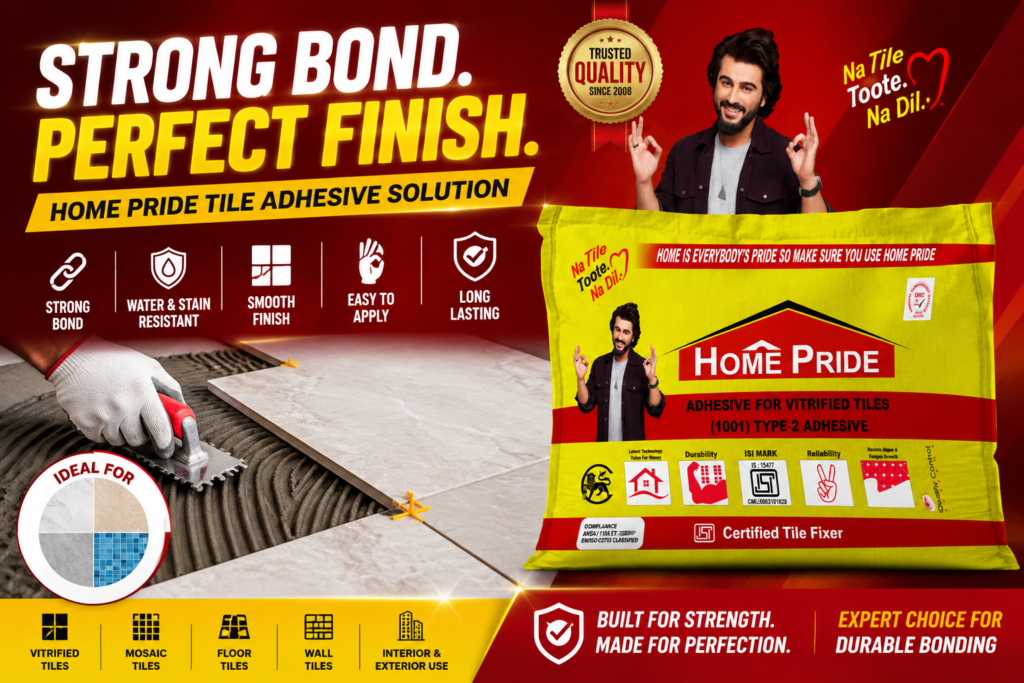
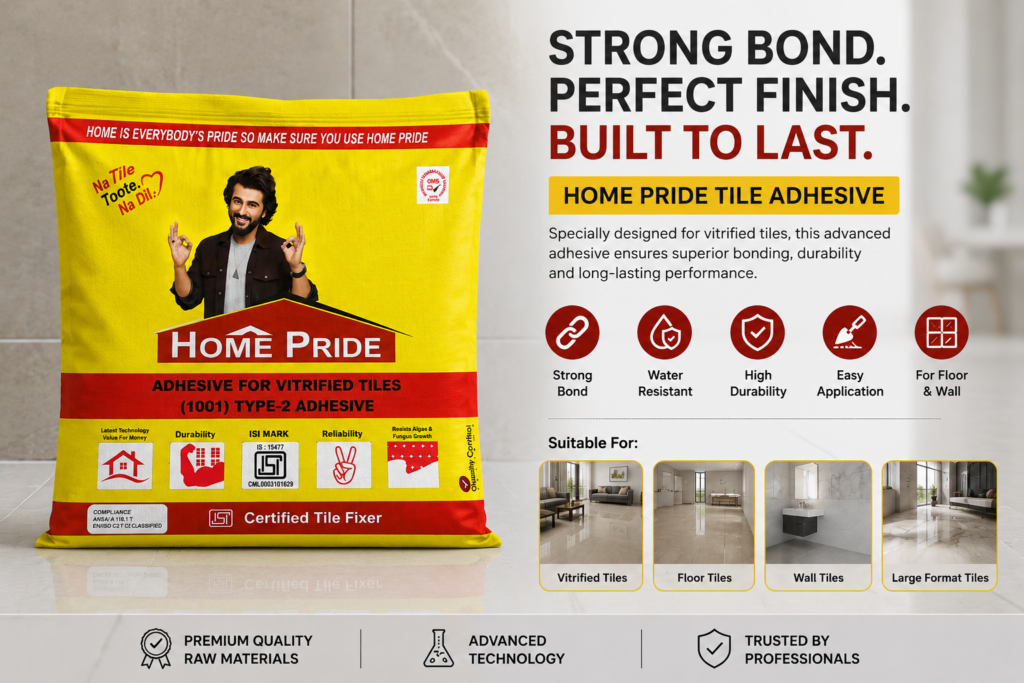
Home Pride provides high-quality tile adhesive solutions designed for strong bonding, durability, and professional construction results across residential and commercial projects.
Conclusion
Tile adhesive is essential in modern construction for strong and durable tile installation. Proper selection, correct application, and quality materials ensure long-lasting results.
FAQs
- What is tile adhesive used for?
It is used to fix tiles on walls and floors. - Is tile adhesive better than cement?
Yes, it provides stronger bonding and durability. - Can tile adhesive be used on walls?
Yes, it is widely used for wall tiles. - How long does tile adhesive last?
It lasts many years if applied correctly.



0 Comment